About
Origins
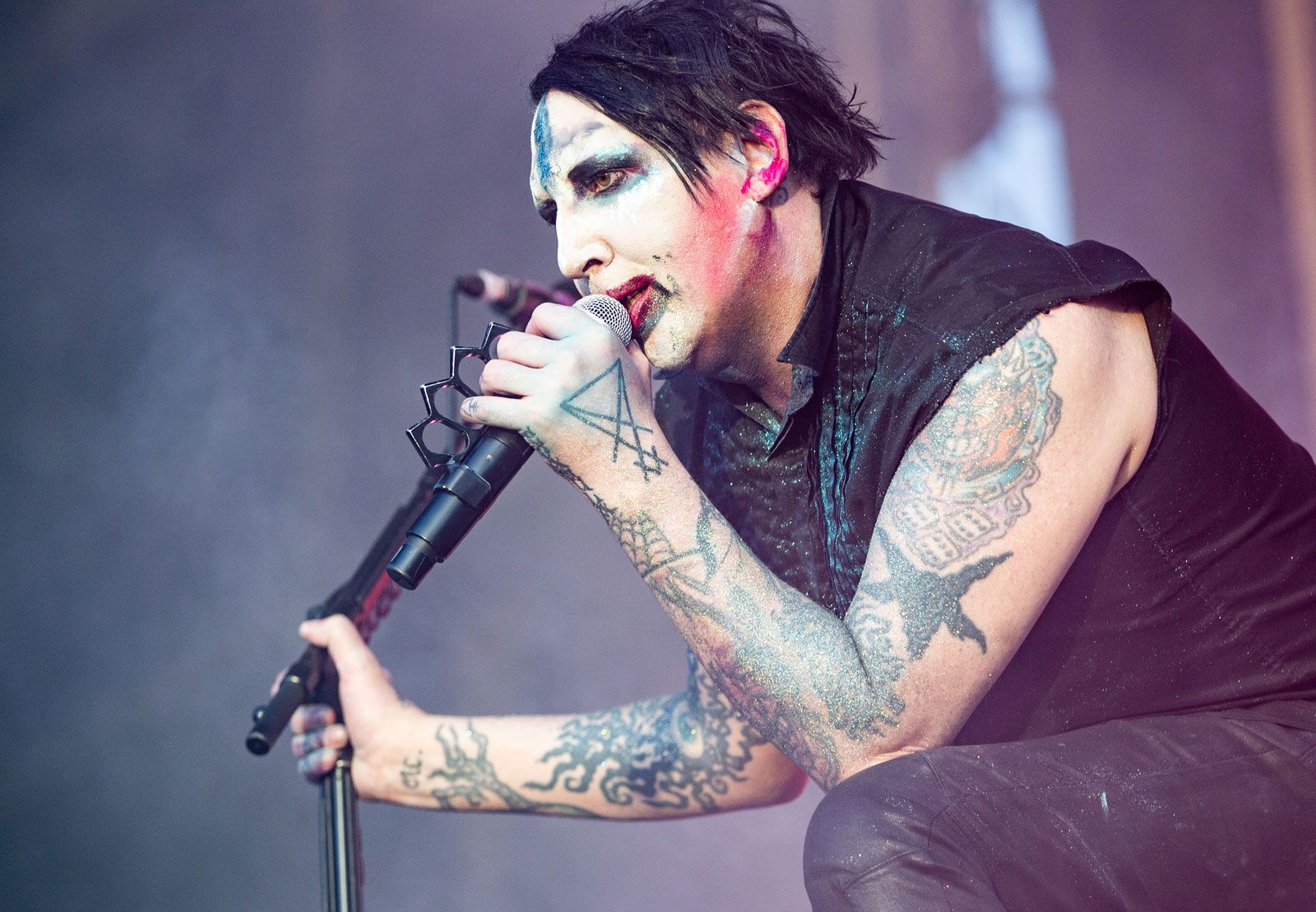
Marilyn Manson emerged in the early nineties from the underground art scene of Fort Lauderdale, Florida. Founded by Brian Hugh Warner and guitarist Scott Putesky, the project began as an experiment in sound, identity, and provocation. By combining glam, industrial, and metal influences with a fascination for American excess, Manson created something that felt both theatrical and dangerous. The band’s name, taken from the dual icons of Marilyn Monroe and Charles Manson, symbolized beauty and corruption as two faces of the same cultural sickness. Their early performances blurred the line between concert and ritual, drawing loyal fans and furious critics in equal measure. What started as a local cult soon became a national controversy, with Manson embodying everything parents feared and audiences couldn’t look away from. It wasn’t just music; it was a manifesto in distortion and desire.
Rise and Controversy
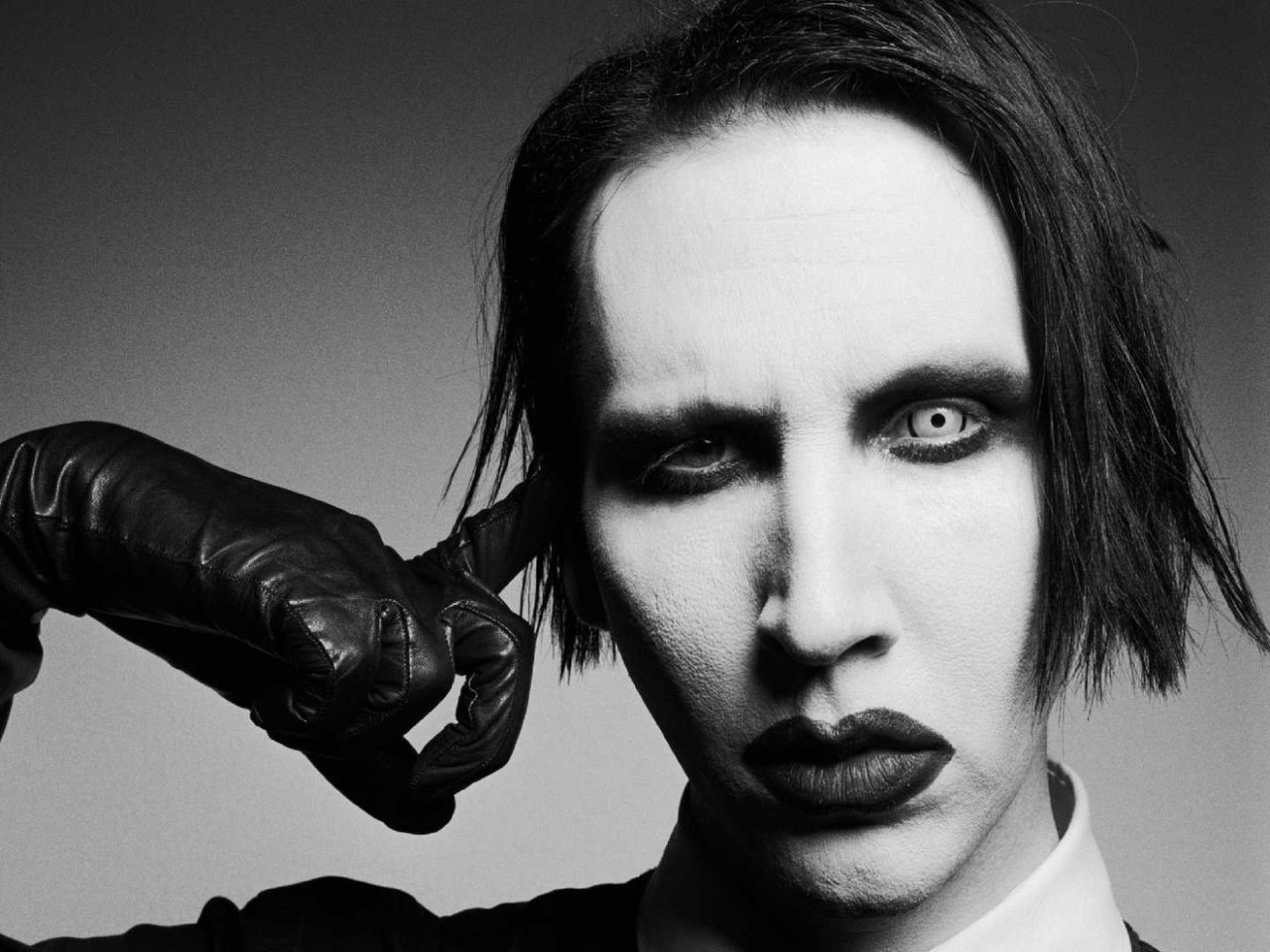
The mid-nineties turned Marilyn Manson from underground spectacle to mainstream disruption. Albums like Antichrist Superstar and Mechanical Animals were both acclaimed and condemned, climbing the charts while being banned across states. Their visuals and lyrics sparked outrage in religious groups, political arenas, and prime-time news debates, cementing Manson’s reputation as rock’s most polarizing figure. Behind the controversy was a deliberate message about hypocrisy, control, and the dark theatre of American morality. Manson became a lightning rod for cultural anxiety, accused of corrupting youth while selling out arenas filled with them. His art exhibitions, books, and acting roles expanded the myth beyond music. Each reinvention peeled back another layer of performance to expose something rawer underneath. Whether vilified or celebrated, Marilyn Manson refused to apologize, insisting that shock without purpose is noise, and purpose without courage is nothing.
Art and Evolution
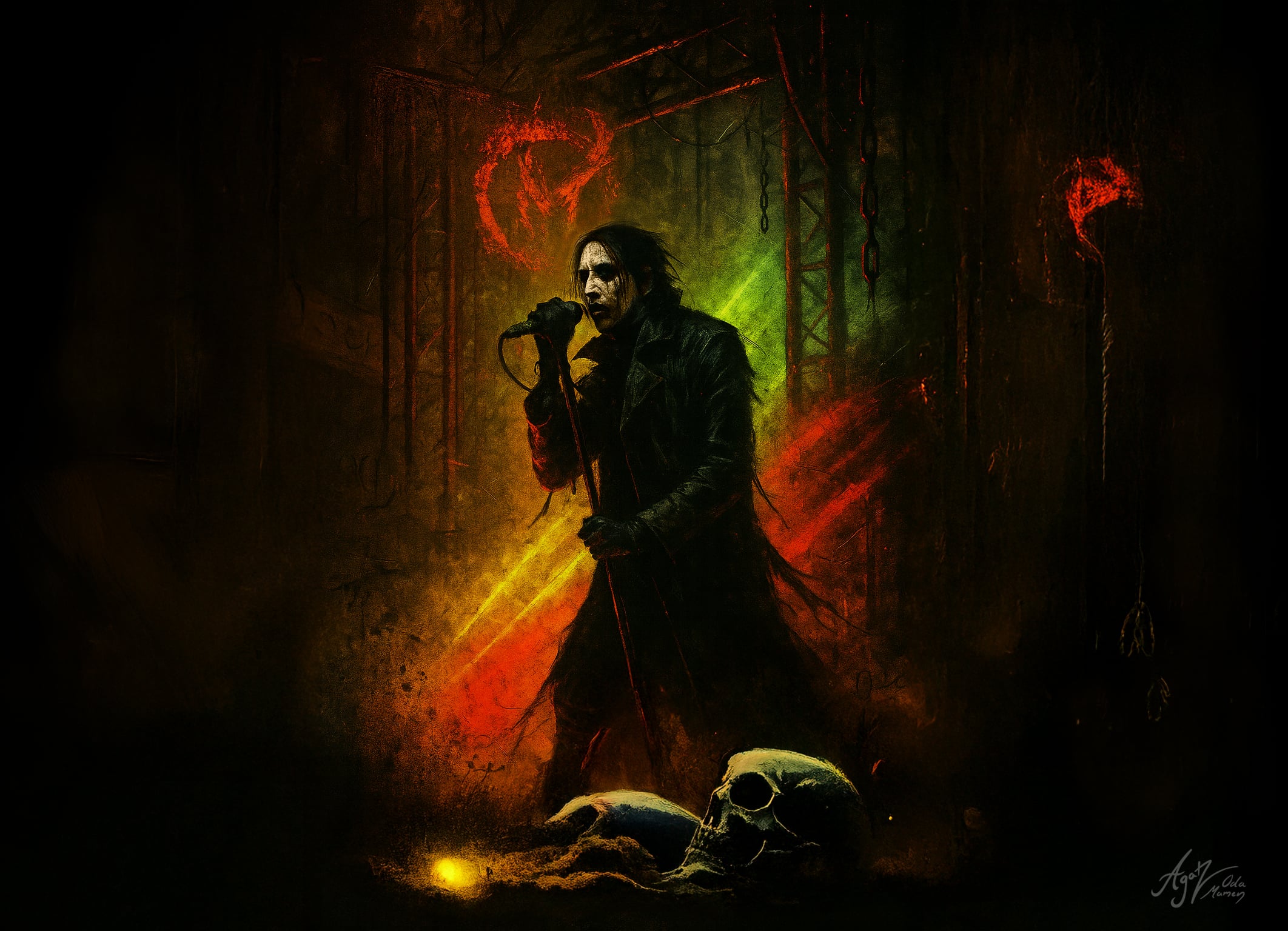
Decades after its inception, Marilyn Manson continues to reinvent itself without losing the venom that defined its birth. The band’s sound has shifted from industrial chaos to haunting elegance, tracing a path through albums that explore fame, faith, and decay. Manson’s collaboration with producer Tyler Bates brought a cinematic edge to works like The Pale Emperor and Heaven Upside Down, proving that provocation can evolve without losing power. Beyond music, Manson’s paintings and film appearances reflect the same aesthetic of beauty in ruin, control within collapse. His work invites discomfort not for spectacle but for reflection, reminding audiences that art should disturb the comfortable and comfort the disturbed. In a culture obsessed with image, Manson remains both creator and critique of that obsession. The performance never ended; it only became more precise, more personal, and more inevitable.